Paper cut-outs: generated images, moved by code
The machine proved that picture and sound could agree. Next I wanted image generation in the mix, and I had an idea for keeping it simple: paper cut-outs. A paper puppet does not need to move smoothly. It needs to be cut out once, in a few poses, and then moved around like in real stop-motion. The images can be generated, and the movement stays in code where it is exact.
Puppets from phone photos
The first one was a small present: a fifteen-second short video, and 2 actors. Two paper puppets in a dark room, the lights going on and off.
The trick that made it work: never use the photos in the film. A handful of phone photos went into one image request, and what came back was a puppet sheet, characters drawn as cut paper standing side by side. Every pose after that (standing, waving, mid-step, reaching for a hand) was generated from the sheet, not from the photos. That kept the paper look consistent and stopped the realism of the photos from leaking back in.
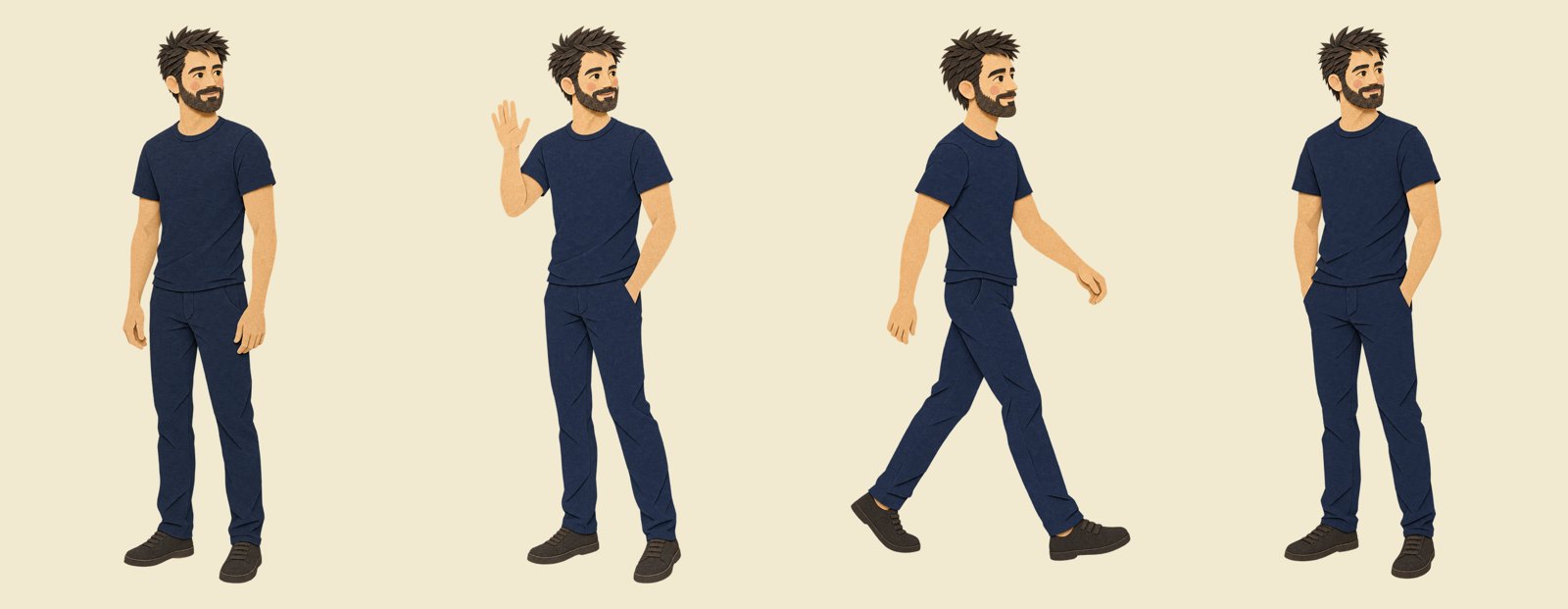 The same puppet, four poses. Each one is a separate image on a transparent background.
Nobody slides
The first version moved the puppets by sliding them across the floor, and it looked wrong straight away. Paper puppets do not glide. The fix is how real stop-motion works: replacement animation. A walk is a stride, a stand, a stride, each one a different cut-out swapped in a few times a second, jumping forward. A turn is the same cut-out flipped like a card. A small jitter, twelve times a second, makes everything feel hand-placed. The camera is the only thing that moves smoothly.
The other device was light. A pull-chain click, the room goes dark, and when the lights come back something has changed. Every blackout hides a cut, so a jump in position reads as magic instead of an edit.
A cat story
A few days later I made a funnier one: a real photo tears into paper, a camera snaps through three pictures, the last one becomes a framed photo on a paper wall, and a cat walks in.
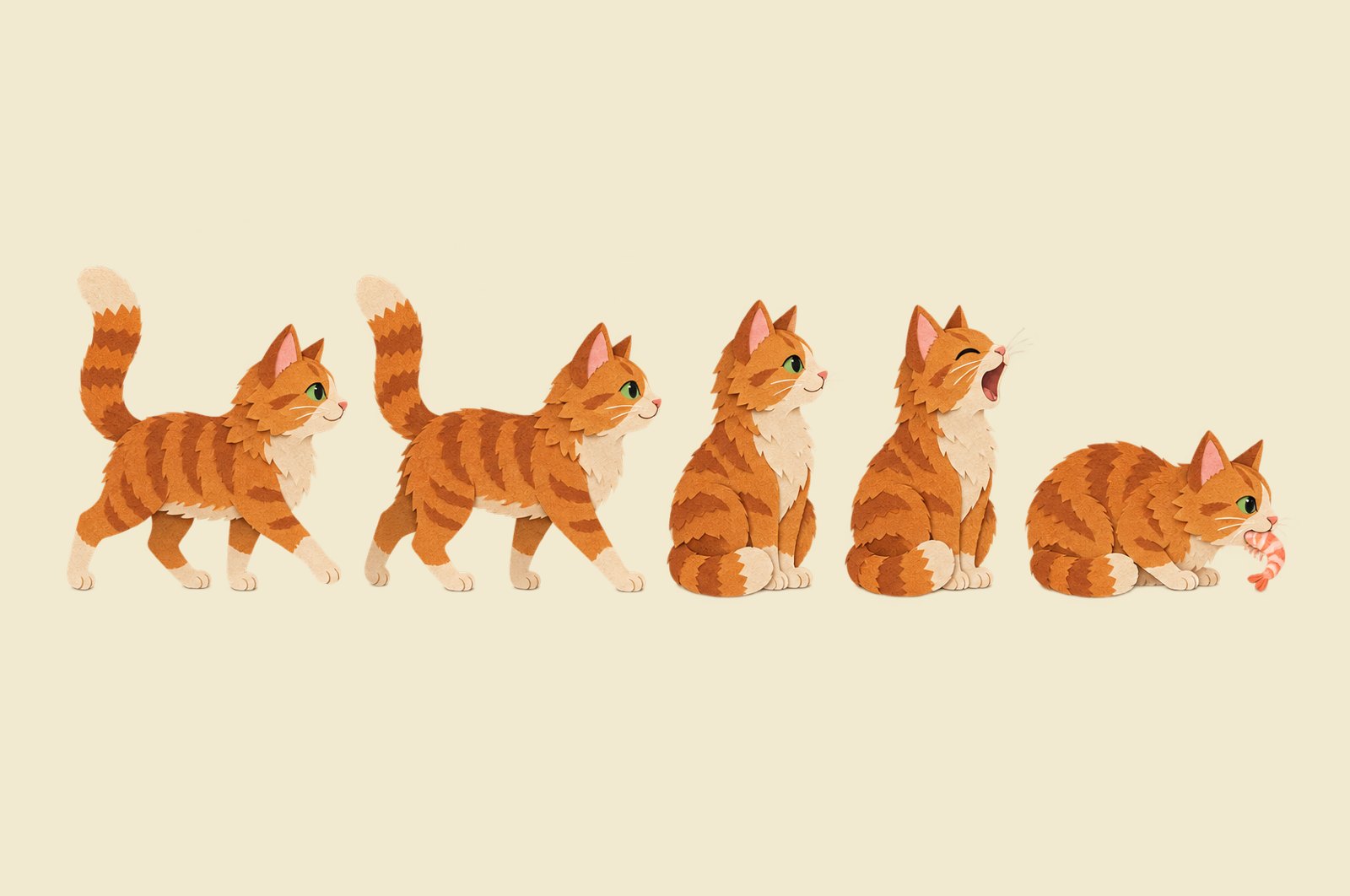 All four cats came out of one image request, then were split apart.
The same puppet, with real references
Then I gave the puppet a job: have an idea, hammer a sign onto the wall piece by piece, flip a switch, and sit on the sofa under the lit sign.
The sign is not an image at all: it is the real wordmark, one vector piece per letter, drawn in code and appearing on each hammer hit. The room, the sofa and the poses were generated.
 Every hammer hit lands on a beat, and every piece of the sign is the real vector.
Reusing the puppet sheet meant the character came for free: every new pose (hammer up, hammer down, flipping a switch, thumbs up) matched the old ones.
What I learned about sound
An AI listener is not a good judge of balance: it called the same click “good” at one level and “buried” at a louder one. The sign’s music was much louder than the love note’s, so effects that had worked before vanished under it. Measuring how far each effect rose above the music worked.
What it cost
The sign: about $3.40 in images and sound.
Next: the puppet steps through the wall, and a video model takes over.