#1 Show HN: I made a picture quiz game where you play against an AI
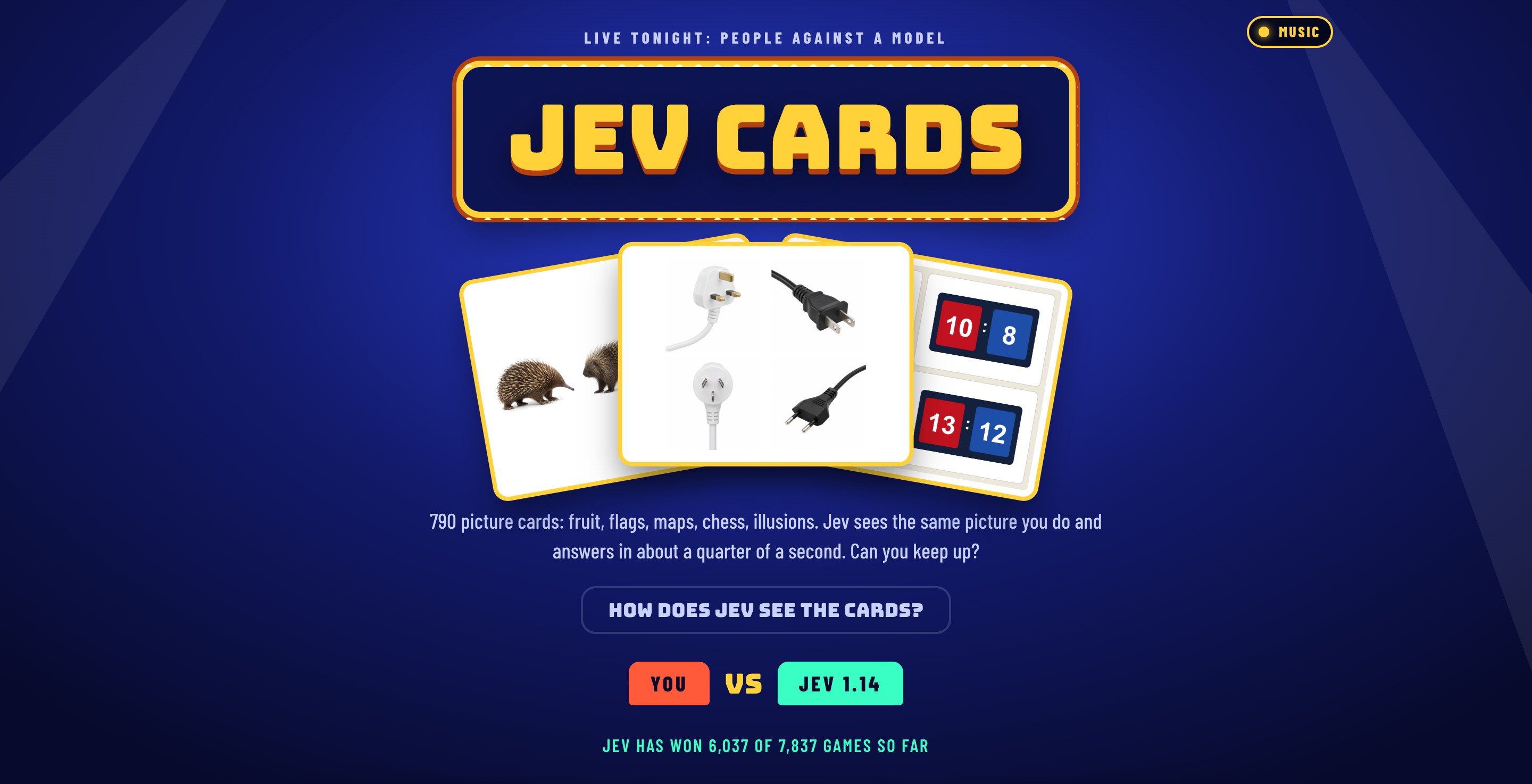
I wanted to make a quiz game. You look at a picture, you answer a question about it, and an AI answers the same card next to you. Whoever does better wins.
That is Jev Cards. The AI is Jev, a decision model: you give it a situation and a list of options, it picks one. It never writes a word. On every card it sees the same picture you do, and it picks from the same buttons.
What I was curious about
If we are going to put these models in front of our critical applications. How good are they actually? How fast are they? And what is the balance speed/accuracy. How do they compare against a human doing the same task?
I created around 500 cards in different categories before I shared it. Is a model better than people at spotting a flag? At reading a clock? At chess? At optical illusions, which exist precisely to fool human eyes? Total 21 themes: animals, flags, landmarks, maps, charts, music, chess, illusions, counting, logic and so on.
Three ways to play
Each mode tests a different thing.
- Sprint is speed. Ten cards, your total time, plus a penalty for every miss. Fastest wins.
- Versus is getting it right under pressure. Ten cards, 10 seconds each. Most right answers wins, and points break a tie.
- Streak is just getting it right. Keep answering until you miss. Longest run wins.
There are also live matches, where you send a link to friends and Jev joins the room as one more player.
Then I posted it
I put it on Hacker News as a Show HN, expecting a few dozen people. It went to #1 on Show HN and stayed there for several hours. The first two hours were a flood: at the peak, more than 2,100 games were finished in one hour.
It was a lot of fun to watch. People were posting their scores, arguing about specific cards, and asking for features.
What happened
By midday the next day there had been more than 7,500 finished games, about 69,000 answers from people and 91,000 from Jev.
Jev won 77% of them. It got 74% of cards right against 64% for people, and it answers in a third of a second. People take about four.
The mode decides a lot, though. It is the same model against the same crowd every time; only what counts as winning changes:
When it is about speed, Jev wins almost every game. When it is about being right with a clock running, people win about one in five. When it is only about being right, people win a third of the games and draw another fifth. (Humanity is saved)
- In Sprint, people won 4.5% of games. Jev finishes ten cards in under 4 seconds. People take about 50. You only win if Jev makes more mistakes than you.
- In Versus, people won 18%, and got more cards right than Jev in about one game in five.
- In Streak, people did best: their run was longer than Jev’s in a third of games. Jev’s longest run was 18. People had 21 runs longer than that, the best of them 91 in a row, which I have some questions about.
Where Jev is good, and where it isn’t
This was the part I was most curious about, and the split is very clear.
Jev is close to perfect at recognising things: nature 100% right, objects 97%, food 95%, animals 95%, landmarks 91%. If the answer is “what is this?”, people do not stand a chance.
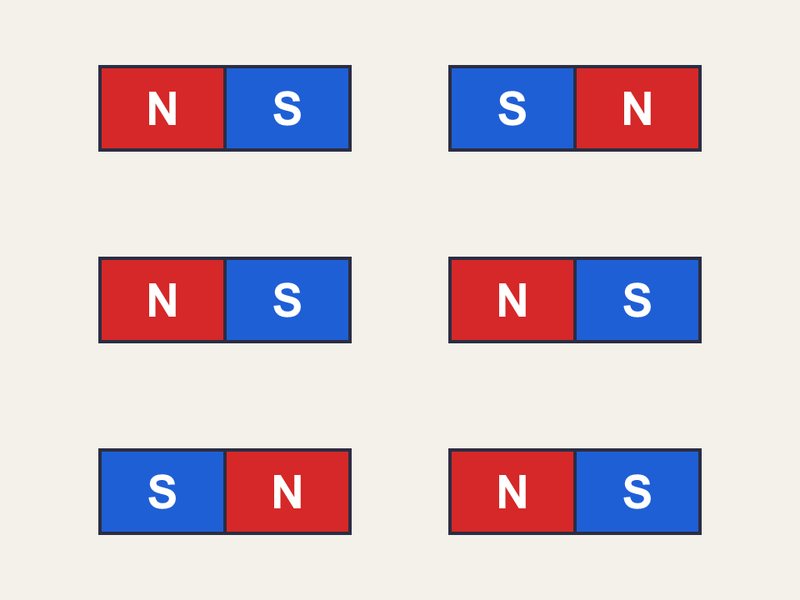
It falls apart when the picture needs reasoning: music 25% (people 55%), chess 31% (people 57%), logic 47% (people 66%). Some cards it never gets right. Show it four angles where only the tilted one is really 90°, and it picks one of the upright ones every time; 99% of people get it. It does not know which pair of magnets attracts, and it cannot add up three darts.
And then there are the illusions. The upside-down T is a classic: the upright line looks longer, but they are the same. Except on my card they are not, the flat one really is longer. People know the trick, answered “same length”, and were right 6% of the time. Jev just measured, and was right every time.
A few of the cards, with how often each side got them right:
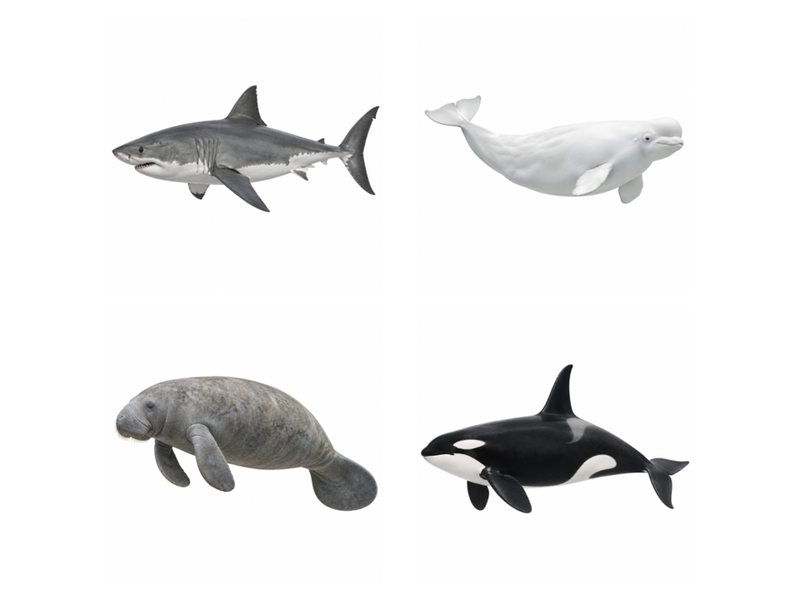

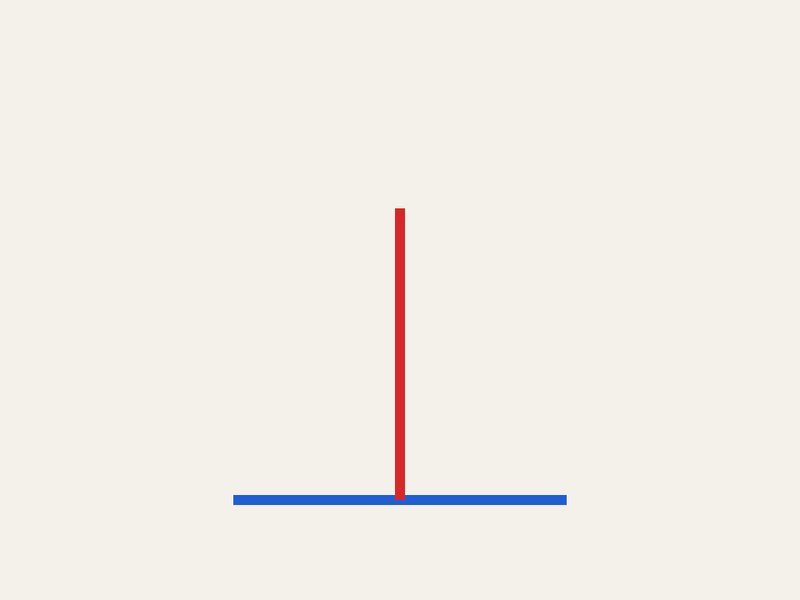
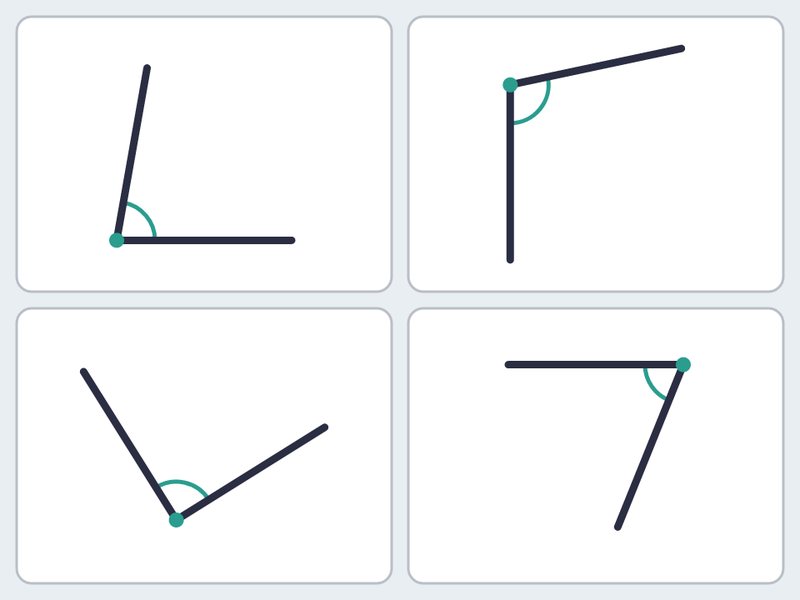
Swipe or scroll sideways for more cards.
What it cost
Jev’s calls for the whole launch, about 100,000 of them, cost under $9. Nearly all of that is the picture: around 2,000 tokens a call in, a handful out.
Play it
Jev Cards now lives on Opper, at jevcards.com, where the next version is coming. The original code is on GitHub: Jose-Sabater/jevcards.
Thank you to everyone who played and argued about the cards in the thread.